
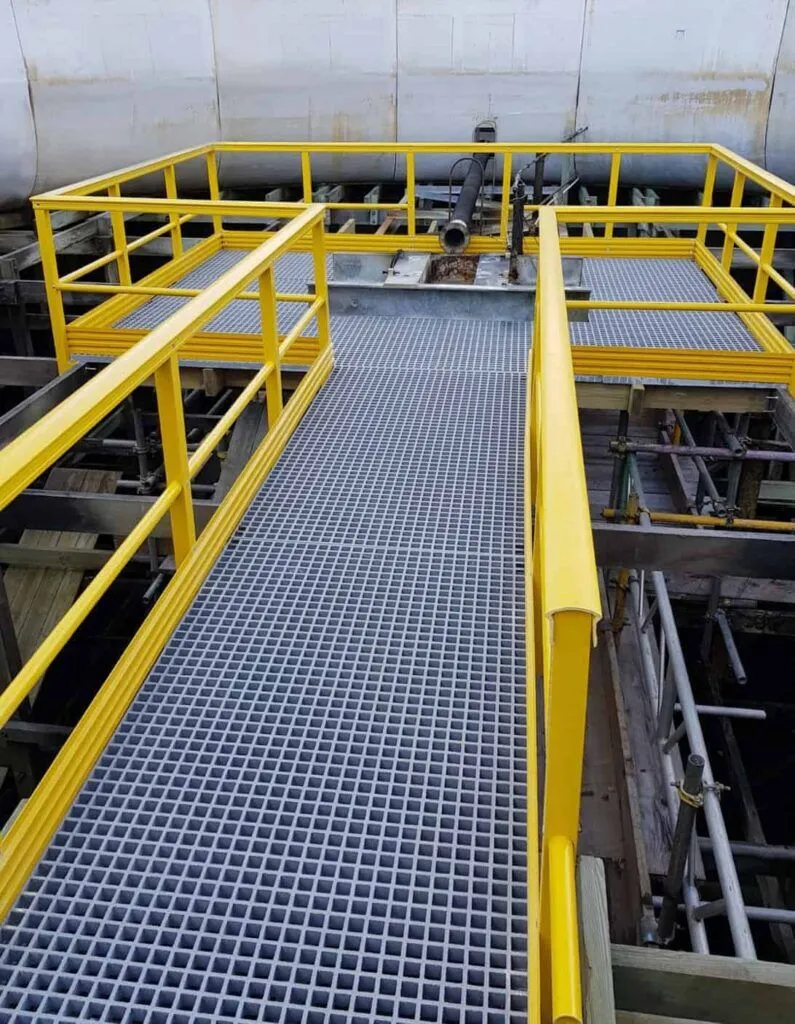
Industrial and commercial buildings need materials that are strong, safe, and cost-effective. One material that is becoming very popular for floors, walkways, platforms, and stair treads is GRP Grating. It is strong, resistant to corrosion, and lasts a long time, helping businesses keep their facilities safe and efficient.
Whether it’s a factory, warehouse, or office building, GRP Grating works well in areas with heavy foot traffic, exposure to weather or chemicals, and strict safety rules.
What Is GRP Grating?
GRP stands for Glass Reinforced Plastic. It is made by mixing strong glass fibers with resin to create a material that is both lightweight and strong.
There are two main types of GRP Grating:
- Moulded GRP Grating: Best for areas with high foot traffic, moisture, or chemicals.
- Pultruded GRP Grating: Stronger and stiffer, ideal for heavy loads and longer spans.
Both types are fire-resistant, non-conductive, and require very little maintenance.
Benefits of GRP Grating
1. Lightweight but Strong
GRP Grating is much lighter than steel but still very strong. This makes it easier and safer to install and maintain, especially in hard-to-reach areas. It also reduces labor costs and installation time.
2. Resistant to Corrosion
Unlike steel, GRP Grating does not rust. It is ideal for environments exposed to water, chemicals, or pollution, such as factories, water treatment plants, or outdoor walkways.
3. Slip-Resistant
GRP Grating often has anti-slip surfaces, keeping workers and visitors safe even when floors are wet or oily.
4. Fire and Electrical Safety
GRP Grating is non-conductive and can be made fire-retardant, making it safe around electrical equipment and flammable materials.
5. Low Maintenance
Unlike steel or wood, GRP Grating doesn’t need regular painting or chemical treatments. This saves time and money over the long term.
Where GRP Grating Is Used
GRP Grating is very versatile and can be used in many places:
- Factories and plants: Walkways, platforms, and mezzanine floors.
- Warehouses: Lightweight and easy to install over large areas.
- Commercial buildings: Stair treads, roof platforms, and maintenance areas.
- Water treatment plants: Resistant to chemicals and moisture.
- Transport hubs: Safe walkways and maintenance platforms.
Cost and Long-Term Value
While GRP Grating may cost more initially, it saves money in the long run:
- Lasts longer than steel or wood
- Requires little maintenance
- Easy and fast to install
- Safe and durable, reducing accidents and downtime
Environmental Benefits
GRP Grating is also eco-friendly:
- Long life reduces waste
- Low maintenance means fewer harmful chemicals
- Lightweight design reduces transport emissions
- Fully recyclable at the end of its life
Easy Installation and Customization
GRP Grating can be cut and shaped on-site to fit any project. Whether it’s a new building or a retrofit, GRP Grating can meet the exact requirements for load, span, and safety.
FAQs About GRP Grating
Q: How is GRP Grating different from steel?A: GRP is lighter, corrosion-resistant, and non-conductive. Steel is heavy and can rust.
Q: Can it hold heavy loads?A: Yes. Pultruded GRP Grating is strong enough for heavy industrial loads.
Q: Is it suitable for outdoor areas?A: Yes. It resists UV, moisture, and wear, making it perfect for outdoor platforms and walkways.
Q: How long does it last?A: Over 20 years with proper installation, even in tough conditions.
Q: Can it be installed on-site?A: Yes. GRP Grating is easy to cut and install without special tools.
Conclusion
GRP Grating is a reliable, safe, and long-lasting solution for industrial and commercial buildings. It resists corrosion, fire, and slipping, and requires minimal maintenance.
By choosing GRP Grating, building owners and facility managers save money, improve safety, and enjoy durable performance for many years. From factories and warehouses to commercial complexes, GRP Grating is a smart choice for modern buildings.