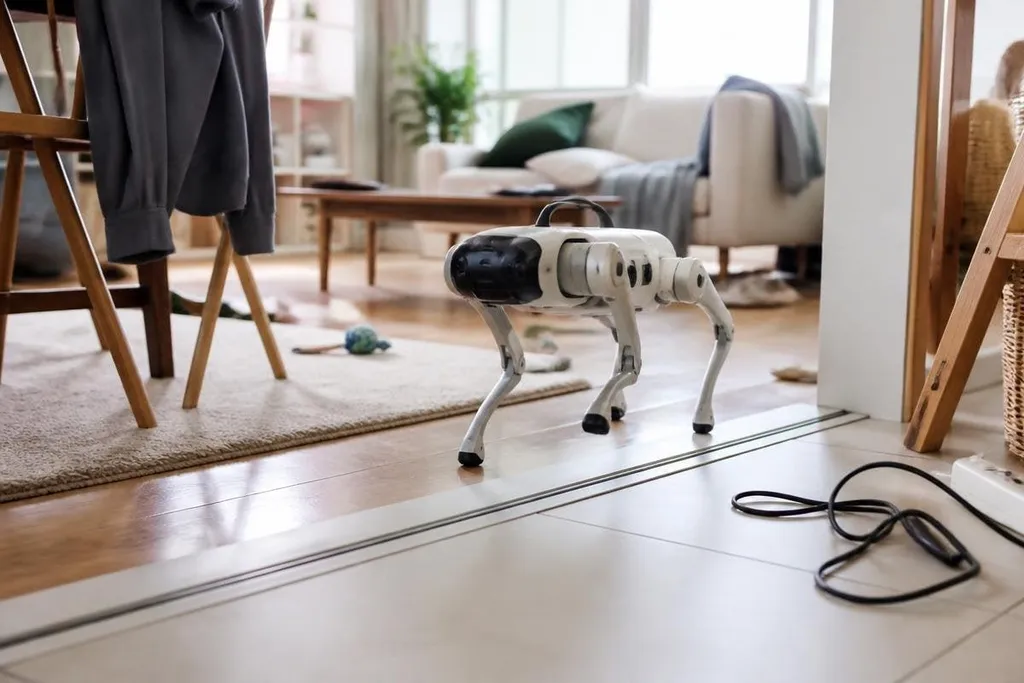
A robot pet can walk across a room in a demo, but living with one asks harder questions. The global race will turn on battery life, noise, safety, and what the machine does after the first week.
- Walking is only one part of the job; home use also needs safe movement and useful responses.
- Home use needs a clear charging plan, simple controls, and parts people can replace.
- The claims still need proof from homes, not only short videos.
Walking is the easy part to show
Home spaces are built for people, not machines. Door gaps, loose cables, rugs, stairs, and chair legs can stop a system that looks steady on a clear floor.
Four legs can give a robot a wide base while it moves, but that shape adds motors, joints, and control work. A two-legged design may use less floor space, yet it has to manage balance while turning, stopping, or stepping over an object. The body plan changes the cost and the failure points.
That is why a short walking clip tells you little about home use. Ask whether the robot can recover from a blocked path, stop when a person reaches toward it, and return to its charger without help. Those are ordinary tasks. They also take place many times each day.
A pet needs a reason to stay switched on
A machine can copy a tail wag or turn toward a sound. The harder problem is giving you a reason to keep it in the room after the novelty fades.
Useful behavior may include responding to a voice command, moving toward a person, carrying a small object, or acting as a moving camera. Each job needs a clear limit.
A camera function raises privacy questions. A moving body raises questions about fingers, pets, stairs, and objects left on the floor.
The control system matters too. Voice commands need to work when music, traffic, or another person is speaking. Touch sensors need to tell the difference between a tap and a pull. If the robot depends on a cloud service, a weak connection can affect basic actions inside the home.
A robot pet’s launch demo can show a working command without showing how it behaves across a full day. A report from Robot 24 can place the robot’s model, maker, test setting, and date beside claims about voice control or touch response. That record gives you a way to judge the home use before the longer test begins.
The home test is longer than the launch video
A real owner needs more than a launch price. They need the cost of charging, repairs, software, replacement batteries, and any paid service tied to the robot.
Runtime should be stated in hours and linked to a task. A unit that runs for two hours while walking may run for less when it streams video, listens for commands, and moves often. Charging time matters because a robot that sits unused for long periods may become furniture with a battery.
Noise deserves a measured figure in decibels. So does weight, because a person may need to lift the robot away from stairs or a doorway. The maker should also state what happens after a motor stalls, a sensor fails, or the network drops.
I’d judge a robot pet by the number of useful days it gives you before the novelty wears off. That is a tougher measure than a smooth first demonstration.
A buying check for robot pets
Use this list before you compare models or place an order:
- Daily job: Name the task you want the robot to do at least once per day.
- Floor plan: Check door widths, rugs, steps, cables, and the space around furniture.
- Battery plan: Record runtime, charge time, battery price, and battery replacement steps.
- Safety controls: Find the stop control, motor limits, fall behavior, and child-access rules.
- Data path: Check what the robot records, where it sends data, and which actions need internet access.
A robot pet makes sense when its daily job fits your home and its limits are clear. The next test for the field is simple: can these machines remain useful, quiet, repairable, and safe after months of ordinary household use?