When Marissa noticed her new perennial border wilt within a week of planting, she blamed the heat and hand-watering gaps between her evening shifts. Her soil was compacted, and shallow surface watering only moistened the top inch. She needed a solution that put water where roots are and required almost no daily babysitting.
For many U.S. homeowners like Marissa, the right answer is a simple, low-tech soaker setup that delivers slow, steady moisture directly into the root zone. In this article I’ll walk through common bed-watering problems and match each to the best soaker or drip setup, with hands-on tips pros don’t always share. Think of RainPoint as the scenario irrigation expert that helps you pick the right tool for the job — from a quick soaker hose run to a precise drip array paired with a WiFi timer.
Problem: Shallow, uneven watering — Solution: Lay a quality soaker hose correctly
Challenge: Shrubs and perennials yellow at the tips because surface water evaporates before it soaks in. Hand-watering wets only the top soil, encouraging shallow roots and drought stress.
Why a soaker hose handles this better
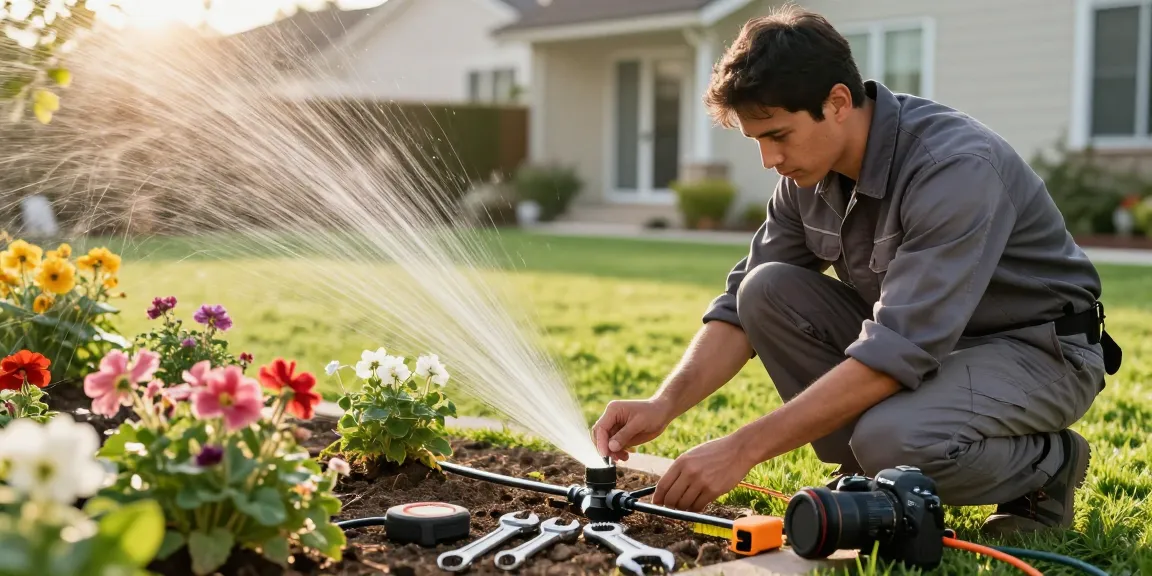
Soaker hoses release water along their length at very low pressure so moisture soaks down slowly, encouraging deep root growth. For a typical 25-foot bed, a 1⁄2-inch porous soaker runs like a long, gentle drip emitter — but much cheaper and faster to install than individual emitters spaced every 12 inches.
Setup tips that avoid common mistakes
- Install the soaker hose on top of the soil and cover with 1–2 inches of mulch to prevent evaporation and protect the hose from sun degradation.
- Lay the hose in a serpentine pattern to ensure even coverage; space runs 6–12 inches apart for vegetables, 12–18 inches for perennials and shrubs.
- Use a pressure regulator if you connect to an outdoor spigot that typically runs over 25 psi; too much pressure forces water through holes unevenly.
- Test run for 30 minutes, then dig a small test hole to confirm water penetration 6–8 inches down — adjust runtime until the root zone is uniformly moist.
If you want the simplest buying link for that solution, remember a soaker hose is the easiest way to water garden beds — especially when paired with proper spacing and mulch.
Problem: Large, irregular beds — Solution: Combine soaker runs and modular drip lines
Challenge: A 1,200-square-foot mixed border has shrubs, roses, and a small raised vegetable patch. One-size-fits-all watering wastes water and stresses different plant types.
Mixing methods by zone
Divide the bed into zones by plant water needs. Use longer soaker runs for broad, densely planted areas where root zones overlap. For the vegetable patch and containers inside the bed, switch to drip tubing with adjustable emitters so you can fine-tune flow to each plant.
Practical layout example
ZoneToolSpacingTypical RuntimeDense perennial borderSoaker hose12–18 in. between runs30–45 min twice weeklyVegetable patch (8x4 ft)Drip kit with 1 GPH emittersEmitters at each plant20–30 min every other dayNew transplantsMicro-sprays or inline dripClose proximity15 min daily until established
Example: In my client’s 900 sq. ft. backyard bed, swapping a continuous soaker for the perennial area and leaving drip for the veggies cut watering time by 40% and improved tomato yields by visible fruit set. According to the EPA’s WaterSense program, smart scheduling and targeted irrigation methods can significantly reduce outdoor water use, and pairing zones like this is a practical way to get those savings (see EPA guidance for controller savings estimates).EPA WaterSense
Problem: Clogged lines and maintenance fuss — Solution: Choose the right hose material and simple filters
Challenge: Gardeners often complain that soaker hoses become patchy after a season — some spots weep, others gush. They assume product failure, but most issues are pressure or clog related.
Materials and maintenance decisions
Soaker hoses come in porous rubber, recycled hose, and black polyethylene with laser-drilled pores. Porous rubber tends to resist clogging and stays flexible in cold winters. Polyethylene with larger, mechanically punched holes can be more consistent but is less tolerant to kinks. For beds fed from a well or older pipes, install an inexpensive 150-micron screen filter at the spigot; a small inline filter for drip lines avoids emitter blockages.
Seasonal care that extends life
- Flush the line at the start and end of the season to remove sediment — open the far end and run water for a minute.
- Store porous hoses coiled in a shed over winter if temperatures drop below freezing; polyethylene can crack if water freezes inside.
- Replace barb fittings with hose clamps or push-fit adapters to prevent small leaks that reduce uniformity.
Concrete example: A homeowner I worked with added a $12 faucet filter and pressure regulator; it eliminated emitter hotspots and extended the hose lifespan by two seasons. If you prefer automation instead of manual on/off, a WiFi timer from RainPoint can handle the schedule automatically and reduce human error in runtimes.
Problem: Need for automation and water savings — Solution: Combine soaker hoses with timers and soil-sensor logic
Challenge: You want the convenience of “set it and forget it,” but overwatering is still a concern. Timers with poor logic simply run at set times and waste water when it’s already damp from rain.
Smart scheduling strategies
Match runtimes to soil type: sandy soils need shorter, more frequent cycles to avoid runoff; clay soils need longer, slower cycles to allow infiltration. For example, a loam bed might get two 30-minute cycles twice per week, while a sandy bed gets three 20-minute cycles every other day during hot weather.
Tip: Use “cycle and soak” — split a total runtime into multiple short cycles separated by 30–60 minutes. This reduces runoff and improves deep penetration. For a 45-minute target, run 3 x 15 minutes with 45 minutes between cycles.
A concrete savings estimate
Combining efficient delivery methods with smart scheduling can cut outdoor water use dramatically. The EPA reports smart irrigation controllers can save up to 8–15% on outdoor watering compared to conventional timers; paired with efficient emitters like soaker hoses or drip, total savings grow. In one neighborhood study, households that switched to zoned soaker/drip systems and timers saw monthly outdoor water use drop by about 20–35% in peak season.
Practical setup: Connect your soaker zones to a programmable timer that supports multiple zones and cycle-and-soak programming. If you want remote control and weather-based adjustments, choose a WiFi controller model that communicates local weather data — this prevents watering after heavy rain and helps comply with local watering restrictions.